The Question That Undoes Me
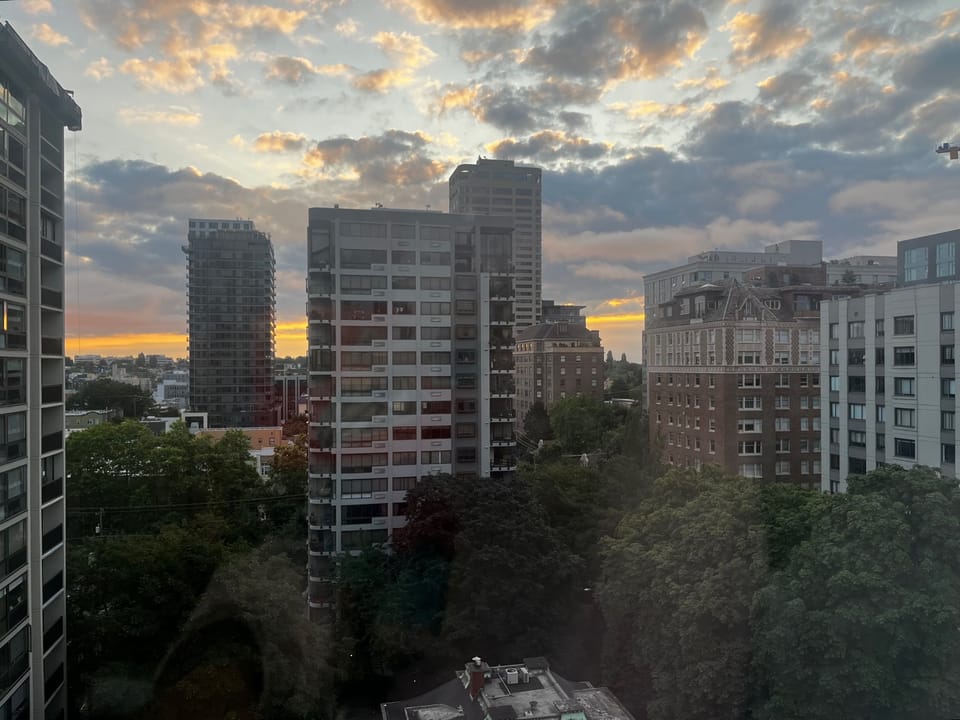
The hardest words at the bedside are not declarations of love, or even last confessions. They are simpler, almost childlike: “Are you coming back?” My father asked me, again and again, and I never knew how to answer. I asked him, even as I counted his breaths slowing into silence. And yesterday, another voice carried the same words, weighted with the same terror. That is the question that undoes me, because it exposes how fragile presence is, how temporary even devotion can be. Camus said that to live is to face the absurd. At dawn, watching the city rise, I felt that absurdity sharpen into clarity: we never really come back, not as before. What we offer instead is witness, memory, the fragile continuity of breath.
Camus also wrote in The Myth of Sisyphus that “the struggle itself toward the heights is enough to fill a man’s heart.” I thought of this as the sky over the hospital shifted from black to rose. My father was gone, and yet the question remained in another man's voice, thirteen months later: “are you coming back?” The dawn didn’t resolve it. It only showed me the hill, the stone, the breath still in my chest. I understood then that I will always be pushing, and that longing itself is a kind of survival.