Heretic and the Architecture of Coercion

Choice as Captivity
A24’s Heretic looks, at first, like a film about survival in a locked house. Two young missionaries enter a stranger’s home, and what follows seems like a series of moral games designed to test their faith. But the film is not really about puzzles or theology — it is about coercion itself. Hugh Grant’s Mr. Reed does not hold his victims captive by brute force alone; he manufactures the illusion of choice. He designs a maze of shifting doors, carefully staged conversations, and semantic traps that convince his captives they are participating in their own undoing.
This is the central horror of Heretic: the realization that captivity can be mistaken for autonomy when every option has been engineered in advance. What unfolds on screen is not just suspense but an allegory for the way abusers, manipulators, and narcissists structure reality. They do not simply lie; they build architecture. They frame the scene, curate what can be seen, control the corridors of communication, and then declare: you chose this.
It is here that Heretic becomes a blueprint for understanding patterns of control far beyond cinema. Mr. Reed’s tactics mirror what many experience in toxic relationships: the partner who tells contradictory stories, isolates people from one another, and reframes intimidation as prophecy. To watch Reed at work is to glimpse the method of men like so many I have known — men who thrive not only on secrecy but on constructing a maze where each woman is held apart, each narrative contradicts the next, and every door leads back to them.
The Core Thesis: Coercion Disguised as Choice
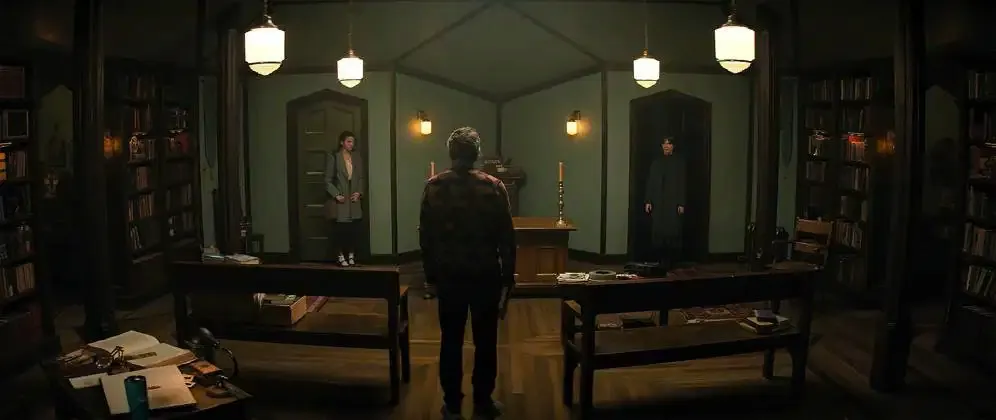
At the heart of Heretic is a simple but devastating thesis: coercion is most effective when it wears the mask of freedom. Reed does not chain his captives outright; he invites them to “choose.” He tells them they are free to walk through this door or that, free to speak or stay silent, free to prove themselves worthy of survival. What they do not see is that every door has been built by his hand.
This is not unlike the way these men structured narratives to both me and other women. At times, he said she did not want to know about his infidelities; at other times, he described her as shattered by them. These versions are mutually exclusive, yet each was deployed to serve him. Whichever door you or she walked through, he remained the architect. Choice itself was rigged.

The Symbolic Architecture of the House
The Maze as Consent
The house in Heretic is not simply a backdrop; it is a character. Every hallway is a cul-de-sac, every door an illusion of exit. Reed insists that what lies beyond each threshold is up to them, but the truth is that no matter which way they turn, the captives remain within his walls.
In my parallel, each man has done the same with narratives. “You don’t want to know” and “you are devastated” are two different doors, but both lead back to his control. He ensured you and the other women could not meet outside his design. The maze is social, not architectural — but no less total.
Language as Trap
Reed’s dialogue is elegant, witty, seductive. He offers puzzles, then changes the rules midstream. If you solve one, he declares you missed the point. The test is never about truth, but about proving his mastery.
In my world, when I sent her the photos, he claimed I had “disrespected her wishes.” Yet he had also portrayed her as devastated by the same revelations. Language was the trap: whichever frame I accepted, I became guilty of something. He shifted semantics until the only fixed point was his control.
The Performance of Civility
One of the film’s most unnerving qualities is Reed’s surface refinement. Dinner is served on fine china. He recites poetry, quotes philosophy, offers gentle smiles. The cruelty is always buffered by civility, as though polished manners could sanctify captivity. Trained through the rigor of Catholicism, but really, any religion that provides that rigid kind of frameworkd. In the final scenes where Reed takes the two missionaries to the basement of locked up women, he admits with pride, the ultimate religion is control.
Outside the film, my men cultivated the image of “good husband” or “good father,” curating appearances for outsiders. Fatherhood becomes a silverware set: polished, displayed, but not proof of integrity. The role was costume, not core — the civilized surface masking manipulation. It fooled everybody, including myself, working through erosion of self to ultimately seal the deal.
Intimidation as Forecast
Reed rarely issues direct threats. Instead, he frames outcomes as inevitabilities: “if you choose this path, this is what will follow.” It is coercion laundered as logic, intimidation disguised as prophecy.
In my recent relationships, I was told that the other woman had “all the ammunition” to keep me from family integration for up to for "five years" leveraging fear and guilt much in the same way that Reed was always one step ahead, leveraging fear of the unknown, but also of what the two missionaries truly understood to be true. It was not legal fact; it was a forecast designed to terrify me. Like Reed, he positions himself as omniscient narrator, pretending to describe reality when in fact he is shaping it.
Isolation as Method
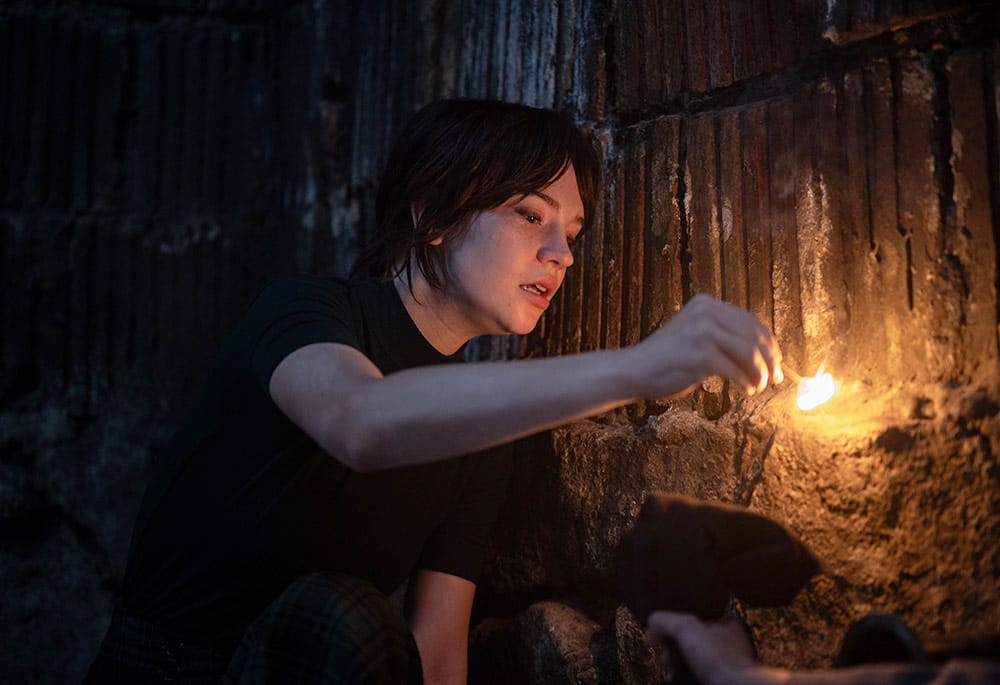
The house is not only a prison but a system of enforced separation. Reed ensures his captives cannot conspire, cannot compare notes. Each is trapped in their own corridor, convinced their experience is singular.
My lover's greatest success was in keeping me and her apart. He spun different stories for each of us, ensuring we never aligned. What might have become solidarity was preemptively severed. Like Reed’s hallways, the separation itself was the architecture.
The Ledger Logic of the Heretic
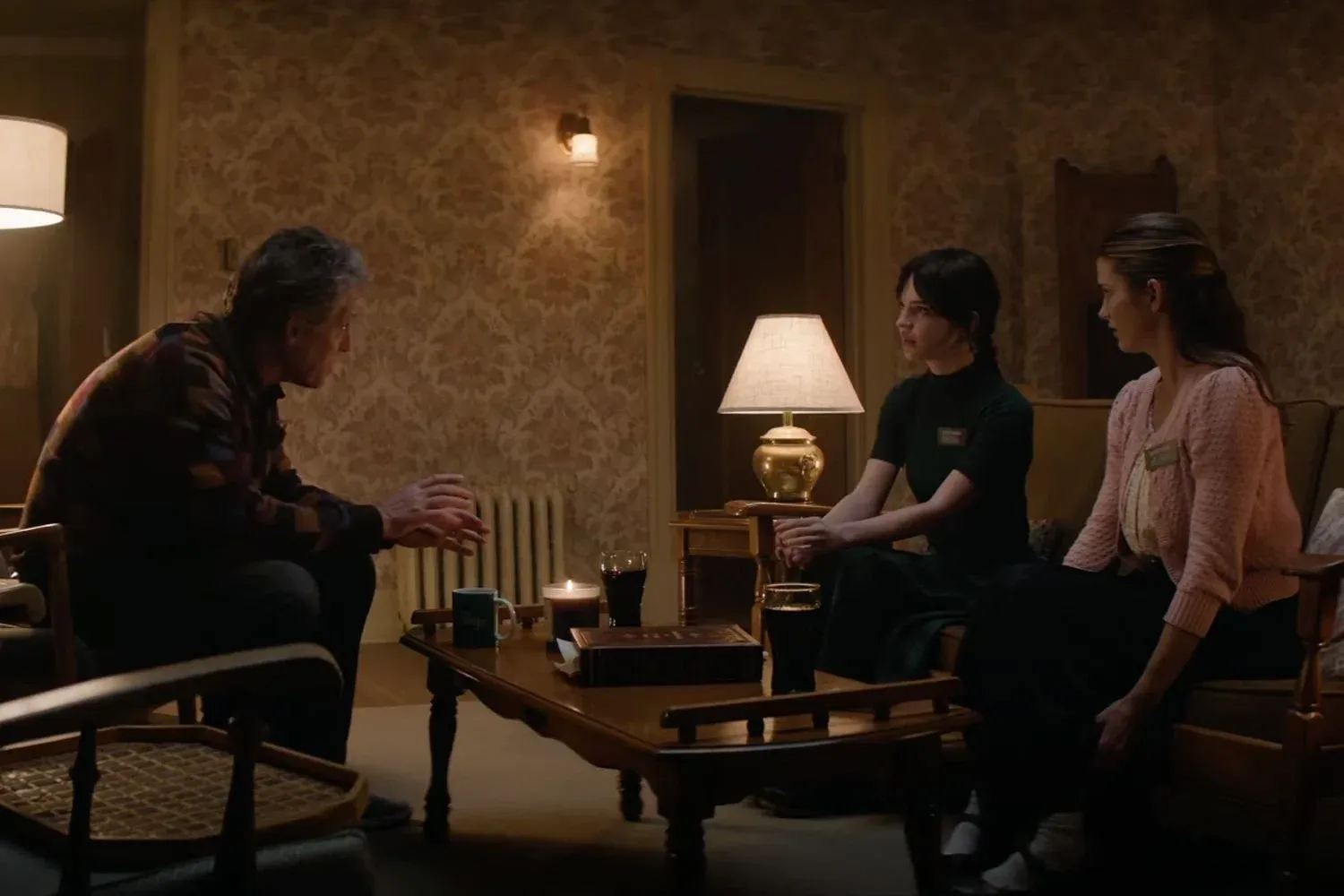
Reed imagines himself not a torturer but a philosopher. He believes he is testing the worth of others, holding up a moral mirror. But his ledger is crooked: he exempts himself from the rules he enforces. His cruelty is framed as pedagogy, his sadism as necessary revelation.
The men I loved too acted as moral accountants. they tallied my “disrespect” while excusing their own sustained infidelities. The presented themselves as arbiter of what she should know, what I had done, what counted as betrayal. In their ledger, they were always exempt.
What the Film Reveals About Faith and Control
At its core, Heretic is a meditation on certainty. Reed believes he sees truth more clearly than anyone else, and that belief justifies any cruelty. He does not want confession; he wants capitulation dressed as confession. His violence is not random but missionary: he is determined to make others see what only he sees.
These men's insistence on defining reality for me and the other women mirrors this dynamic. He reframed fear as fact, secrecy as protection, lies as context. Their certainty was never neutral; it was the weapon that allowed them to overwrite all of our truths. And ultimately, this turned us into abandoned, crippled monsters, necessitating the kind of care that only a parent could deploy. We were infantilized. We were made into gargoyles, cemented in stone and locked in Blue Beard's basement.
Conclusion: The Door That Shouldn’t Exist
In Heretic, the most terrifying realization is that there is no door Reed didn’t design. The exits are illusions, the tests are traps, the very notion of freedom is pre-scripted. His victims cannot win because the game itself is false.
His behavior is a mirror of this architecture. He built social corridors where you and she could never meet, contradictory stories that always served him, and predictions that functioned as threats. Like Reed, he ensured that whichever door you opened, you remained in his house.
And yet, there is one door Reed did not build: refusal. In my letter to her, I created the door that was never meant to exist. I stepped outside the architecture of these men, collapsing the maze by refusing to accept its terms. Whatever follows, the enclosure is broken. The frame is no longer only his.
